Early Chinese contact
The source recounts a Chinese expedition to Okinawa and notes that the first historical record of the incident appears in the Chinese chronicle Sui Shu in 616.
 Isshinryu.comTraditional Okinawan Karate
History of Isshinryu
The story of Isshinryu begins long before the system had a name—with Okinawa's position between great cultures, generations of martial exchange, and the teachers whose knowledge ultimately reached Tatsuo Shimabuku.
Chapter 01
Geography, trade, political upheaval, and cultural exchange created the conditions in which Okinawa's fighting traditions developed.
The Ryukyu Islands stretch from the southern tip of Japan across the East China Sea toward Taiwan. Okinawa, the largest island in the chain, occupied a strategically valuable position along the shipping lanes connecting Japan and China.
Its deep, sheltered harbors made the island a natural stopping point for merchant vessels. People, goods, ideas, and fighting methods moved through those ports. The historical source used for this section presents that constant exchange—together with Okinawa's own indigenous martial traditions—as part of the foundation from which Te, meaning “hand,” developed.
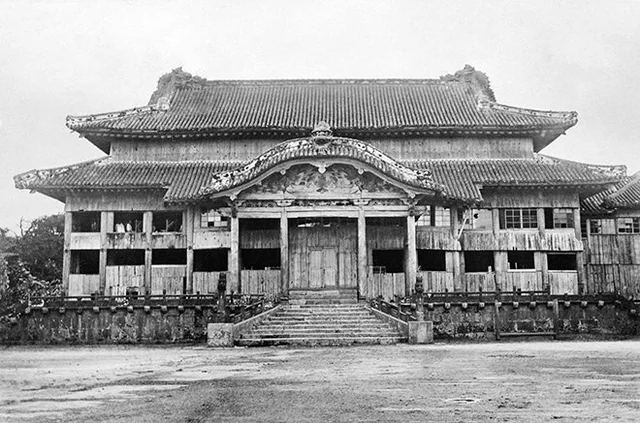 Historic Shuri Castle
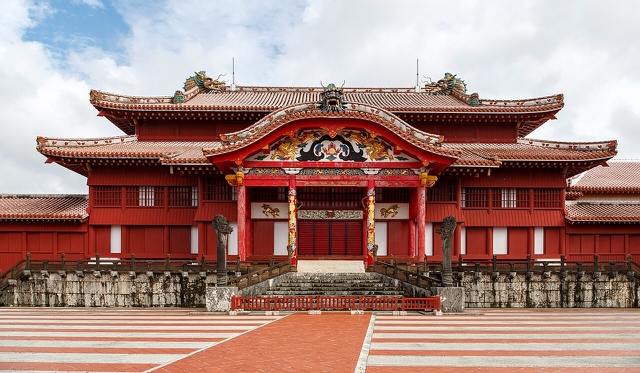 Shuri Castle in the modern era
The source recounts a Chinese expedition to Okinawa and notes that the first historical record of the incident appears in the Chinese chronicle Sui Shu in 616.
During periods of conflict in Japan, surviving members of the Minamoto clan are described as taking refuge on Okinawa. The source connects Japanese martial skills, Chinese Kempo, and indigenous Okinawan methods with the foundation of Te.
Okinawa was divided among Hokuzan, Chuzan, and Nanzan. King Satto came to power in centrally located Chuzan, the most powerful of the three kingdoms.
Satto entered a tributary relationship with Ming China. Preferred trading status and cultural exchange helped usher in what the source calls the Ryukyu Kingdom's “Golden Age,” lasting from 1372 to 1570.
Chinese families from Fukien settled near Naha. Diplomats, teachers, interpreters, artists, and practitioners of Chinese Kempo contributed to Okinawa's cultural and martial exchange.
After seizing Chuzan in 1407, Sho Hashi eventually united Okinawa's three kingdoms and continued the profitable relationship with China.
King Sho Shin prohibited the carrying and private possession of weapons and required the nobility to live near him. The source identifies these restrictions as an important influence on the further development of weaponless fighting techniques.
A Satsuma force of 100 ships and 3,000 men invaded Okinawa. The Ryukyuan forces surrendered, Shuri Castle and the government came under Satsuma control, and Okinawa's era of independence ended.
The martial consequence
The Japanese continued the prohibition on weapons after the invasion while samurai retained their arms. The source presents this unequal environment as part of the context in which Okinawan empty-hand methods and the adaptation of everyday implements continued to develop.
That history does not produce a single, simple origin story for karate. It produces something more useful: a picture of Okinawa as a place where local practice, Chinese influence, Japanese influence, necessity, and generations of transmission converged.
Chapter 02
Karate did not arrive through a single straight line. Okinawan practice absorbed local, Chinese, and Japanese influences before distinct traditions emerged around Shuri, Naha, and Tomari.
The source is explicit about the limits of the record: karate's early history is obscured by myth, legend, and the scarcity of surviving written accounts. Much of the art was transmitted orally and physically through kata.
Within that uncertain early history, the source traces a progression from Te — “hand” — and the Chinese-influenced Tode — “China hand” — toward Okinawan-Te. Maritime exchange, the Thirty-Six Families near Naha, Chinese Kempo, and generations of Okinawan practitioners all form part of that development.
Three centers of development
The source describes three distinct systems named for the towns in which they developed. The towns were only a few miles apart, and the traditions shared much while emphasizing different qualities.
The source describes Shuri-te as probably more influenced by Shaolin boxing and as emphasizing speed. By the late nineteenth century, this line is associated with the emergence of Shorin-Ryu.
Naha-te is described as emphasizing circular movement, breath technique, and ki. Kanryo Higaonna is identified as an organizer of the Naha-te system, with Chojun Miyagi later founding Goju-Ryu.
Tomari-te is described as incorporating a blend of the other two traditions. Its lineage remains part of the broader Okinawan karate story, even though the source's Isshinryu narrative focuses primarily on the Shuri and Naha lines.
The lines that reach Isshinryu
The source calls Kyan Shimabuku's most significant teacher and notes that Shimabuku learned Seisan, Naihanchi, Wansu, Chinto, and Kusanku from him. It also stresses that the Okinawan karate/kobudo chart places Shimabuku specifically in the Shuri-style lineage.
According to the source, Miyagi taught Shimabuku Sanchin and Seiuchin. The same source cautions that Shimabuku does not appear in the Naha-style lineage chart; it interprets this as recognition of a shorter period of Goju-Ryu study, not as evidence that the study did not occur.
Chapter 03
Isshinryu was not created in isolation. Tatsuo Shimabuku trained within a living Okinawan tradition shaped by teachers whose methods emphasized different dimensions of karate: speed, structure, breath, fighting application, kata, and kobudo.
The source concentrates on the masters with a direct relationship to the development of Isshinryu. Their influence did not reach Shimabuku in equal ways, and not every name represents a direct teacher-student relationship.
Read together, however, they show the breadth of material that surrounded Shimabuku: the Shuri-te line associated with Matsumura and Kyan, the Naha-te line through Higaonna and Miyagi, Motobu's practical fighting emphasis, and Taira's preservation and transmission of Ryukyu kobudo.
The Shuri-te foundation
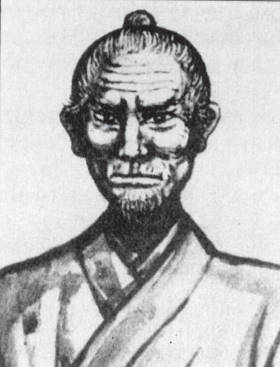
The source places Matsumura at the head of the Shuri-style lineage and describes him as one of Okinawa's best-known karate masters. A student of Karate Sakugawa, Matsumura served the royal Sho family and became known by the title Bushi, meaning “warrior.”
His importance to Isshinryu is primarily ancestral: Matsumura's teaching flowed into the Shuri-te tradition and reached Chotoku Kyan, one of Tatsuo Shimabuku's most significant instructors.
The Naha-te foundation
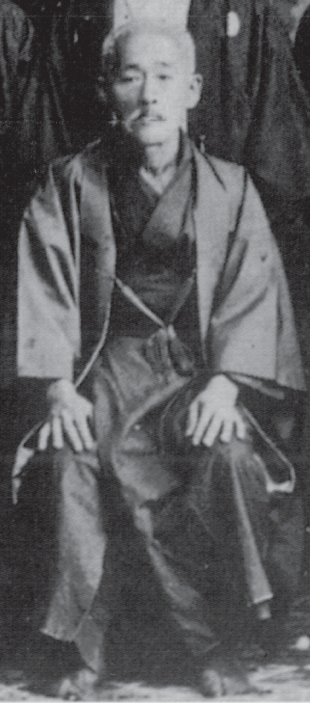
Higaonna is identified by the source as the organizer of the Naha-te system. It recounts his training in Fuchow, China, under Liu Liu Kong (Ryu Ryuko), with particular emphasis on Sanchin, strength development, and rigorous conditioning.
Higaonna did not teach Shimabuku directly. His importance is through Chojun Miyagi, his student, whose Goju-Ryu training later contributed Sanchin and Seiuchin to Shimabuku's developing system.
Hard and soft
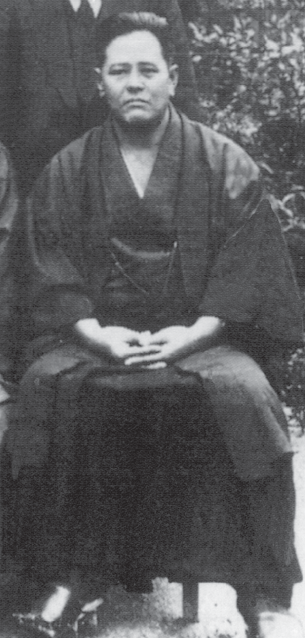
Miyagi trained for years under Kanryo Higaonna and later developed Goju-Ryu, “Hard/Soft.” The source credits him with developing Tensho and formally registering the Goju name in 1933.
For Isshinryu, Miyagi's role is direct. The source states that Shimabuku studied with him for about three years beginning in 1936 and learned Sanchin and Seiuchin. Those kata became the principal Goju-Ryu contributions to Isshinryu's empty-hand curriculum.
Shimabuku's principal teacher
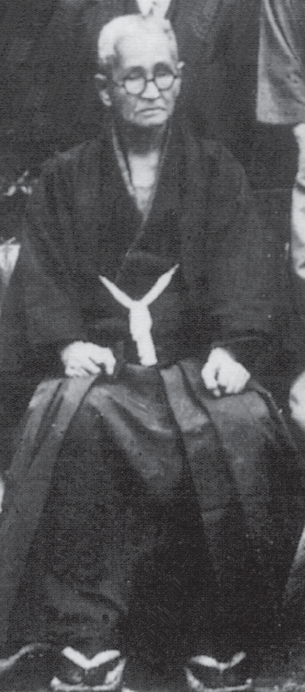
Kyan studied under several major Okinawan masters, including Sokon Matsumura, Anko Itosu, and Pechin Oyadomari. The source emphasizes his quick reflexes, mobility, balance, and use of angles against larger opponents.
Shimabuku began training with Kyan around 1932. From him, the source says, he learned Seisan, Naihanchi, Wansu, Chinto, and Kusanku. Because these five kata form the bulk of Isshinryu's empty-hand curriculum, the source identifies Kyan as Shimabuku's most significant teacher.
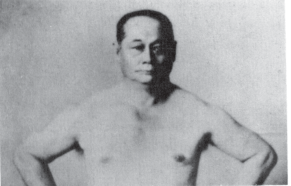
Fighting application
Motobu is presented as a formidable fighter whose approach centered on practical effectiveness. The source associates him strongly with Naihanchi, makiwara training, physical conditioning, and testing technique through actual encounters.
Shimabuku's study with Motobu was comparatively brief — described as something less than a year — and focused on fighting skills and Naihanchi. His influence therefore belongs less to a large kata inheritance than to the practical combative dimension of Shimabuku's development.
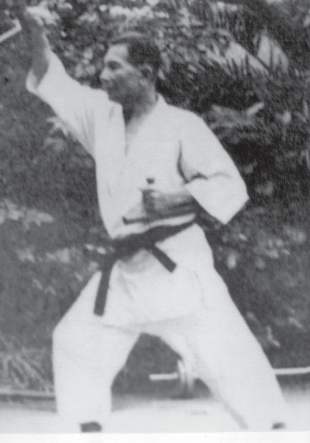
The weapons tradition
Taira devoted much of his life to Okinawan weapons and to the preservation and spread of Ryukyu kobujutsu. The source notes his study of many weapons, his writing on Ryukyu kobujutsu, and his 1940 organization dedicated to preserving Ryukyu martial arts.
In the 1950s, Shimabuku studied weapons under Taira, concentrating on the bo, sai, and tuifa. That training supplied a major portion of the kobudo material Shimabuku incorporated into Isshinryu.
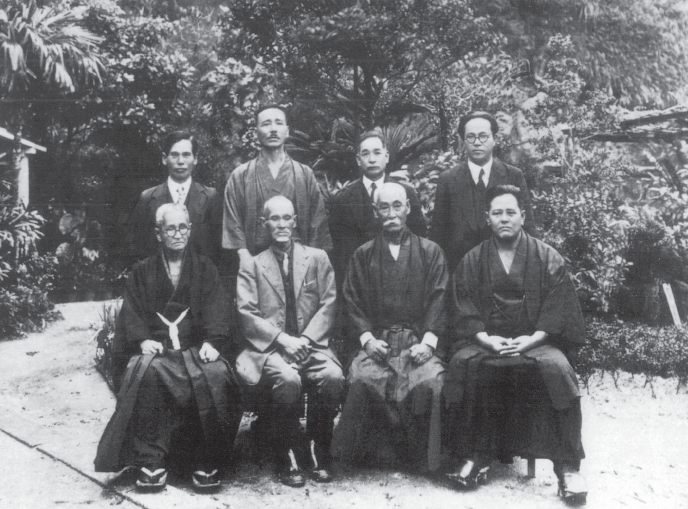
What Shimabuku inherited
Kyan supplied the majority of the empty-hand kata that would become Isshinryu.
Miyagi supplied Sanchin and Seiuchin and a contrasting training tradition.
Motobu sharpened the fighting emphasis already present in Shimabuku's training.
Taira's teaching provided important bo, sai, and tuifa material.
Chapter 04
Before Isshinryu had a name, Tatsuo Shimabuku spent decades absorbing different Okinawan traditions, testing ideas, and refining the movement principles that would become his own system.
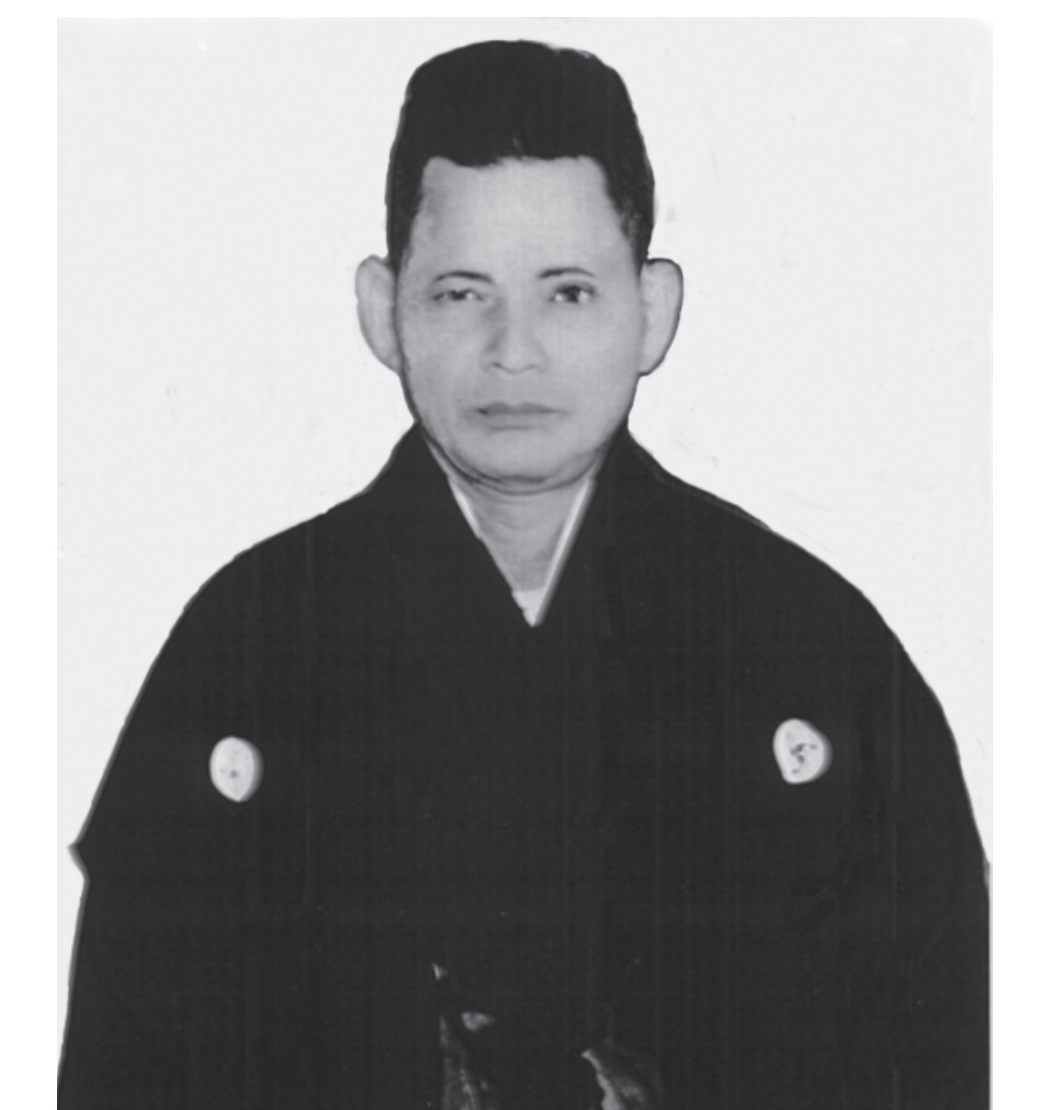
1908–1975
The source records Shimabuku's birth on September 19, 1908, in the village of Chan. Originally recorded as Shinkichi Shimabukuro, he began martial study as a child and eventually became the figure who drew several strands of Okinawan karate and kobudo into Isshinryu.
His development was gradual rather than sudden. Early instruction under his maternal uncle Ganeku was followed by years of study with Chotoku Kyan, Chojun Miyagi, Choki Motobu, and later Shinken Taira. Each period contributed something different to the system he would eventually shape.
The formative years
Shimabuku began training with his mother's brother, Ganeku, who taught a version of Shuri-te. The source also credits Ganeku with encouraging formal education and introducing Shimabuku to the I Ching, which helped foster his later interest in divination and the Okinawan practice of sumuchi.
At about twenty-four, Shimabuku began training with Kyan. The source states that he learned Seisan, Naihanchi, Wansu, Chinto, and Kusanku during this period and identifies Kyan as his most significant teacher.
Shimabuku moved into the Naha-te/Goju-Ryu tradition for approximately three years. From Miyagi, the source says, he learned Sanchin and Seiuchin — two kata that would later remain part of Isshinryu.
His study with Motobu was comparatively brief, described as something less than a year. The emphasis was practical fighting skill and additional work on Naihanchi.
After the war
After World War II, Shimabuku began teaching a small group of Okinawans and experimenting more deliberately with his own ideas. The source describes those ideas as centered on natural movement: shorter stances, a more upright posture, quicker changes of direction, and less telegraphing.
One of his most consequential decisions was to make the vertical punch — described in the source as the “standing palm” — the primary punch of his developing system. He believed it could travel from a more natural position, arrive faster, and reduce the tendency to lock the arm at full extension.
A more upright structure intended to support faster directional change.
Technique organized around efficient body mechanics rather than exaggerated motion.
A direct striking method that became one of Isshinryu's most recognizable characteristics.
Shimabuku altered and refined what he had inherited instead of preserving every method unchanged.
Before “Isshinryu”
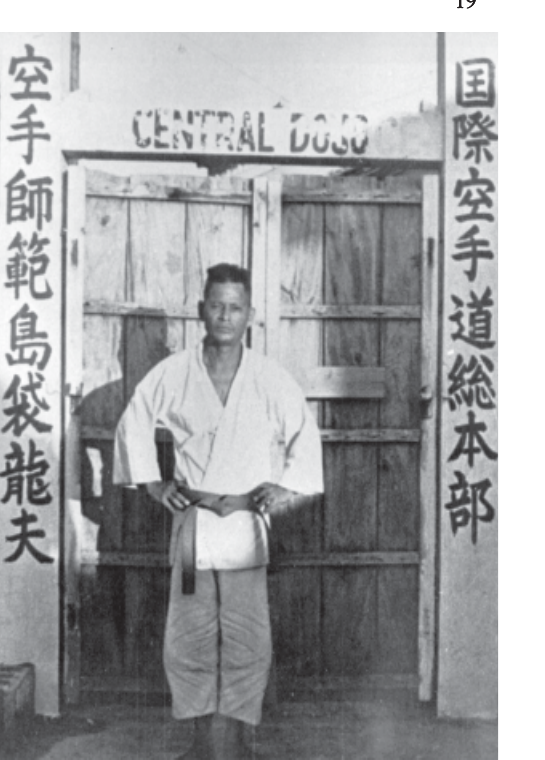
The source says Shimabuku originally called his developing system Chan Migwa-te, translated there as “Small Eyed Kyan's Karate.” Migwa was a nickname for Chotoku Kyan. The name is a reminder that even as Shimabuku experimented with new mechanics, he continued to acknowledge the teacher whose kata formed the largest part of his empty-hand curriculum.
The next threshold
In the early 1950s, Shimabuku began teaching Marines stationed on Okinawa. The source notes that he initially taught where he trained his Okinawan students and later secured a contract to teach at Kadena Air Force Base.
Those servicemen would eventually return to the United States carrying his methods with them. The system still did not yet have its final name, but the conditions for its spread were already in place.
Chapter 05
By the mid-1950s, Shimabuku had moved beyond experimentation. He named his system, continued refining it, and taught servicemen who would carry Isshinryu far beyond Okinawa.
In January 1956, Tatsuo Shimabuku gathered his students and formally proclaimed the name Isshinryu — the “One Heart Way.” The system was still developing, but it now had a distinct identity.
The source makes clear that Isshinryu did not emerge as a frozen collection of techniques. Over the next nineteen years, Shimabuku continued to revise mechanics, kata performance, and teaching method while preserving the principles he considered most effective.
Shimabuku taught U.S. Marines stationed on Okinawa and later secured a teaching contract at Kadena Air Force Base. As servicemen rotated home, they carried his methods back to the United States and helped establish the foundation for Isshinryu's international spread.
Shimabuku formally named his developing system Isshinryu. The source presents this as the defining moment when years of experimentation became a distinct school of karate.
Shimabuku opened his first public dojo in Agena. He later operated a second formal dojo in Kin-Son, about fifteen miles north, rotating between the two and relying on other Okinawan instructors to help teach.
The source notes that a set of films was recorded of Shimabuku performing kata in 1958. Although it says this set had not been widely available, it identifies the films as part of the permanent record of his kata performance.
Shimabuku traveled to the United States, strengthening direct contact with the growing American Isshinryu community. A set of kata films was recorded during this period.
Shimabuku returned to the United States for a second visit. Another set of kata films was recorded, preserving his performance during a period when Isshinryu was already spreading well beyond Okinawa.
Tatsuo Shimabuku died on May 30, 1975. By then, the system he had named less than two decades earlier had already taken root internationally.
A system of his own
The vertical punch became one of Isshinryu's defining mechanics. The source also notes that Shimabuku briefly returned to a corkscrew punch under outside pressure before restoring the vertical punch to the system.
Shimabuku altered inherited kata beyond simply changing the punch. The source describes changes to blocking mechanics, performance angles, and even the direction in which some kata begin.
Shimabuku added Sunsu, a kata unique to Isshinryu. The source describes it as his own creation, incorporating techniques he considered among the best of his martial experience.
Believing that an Okinawan karate system should include weapons, Shimabuku incorporated bo, sai, and tuifa material developed through his study with Shinken Taira.
From Okinawa outward
American military personnel were stationed on Okinawa only temporarily. That short rotation became an unexpected advantage for the spread of Isshinryu: students trained under Shimabuku, returned home, and began teaching what they had learned. The source identifies this cycle as the foundation for Isshinryu's growth throughout the United States and eventually around the world.
A permanent record
The source references three sets of films showing Shimabuku performing kata: an earlier set from 1958 and two later sets associated with his 1964 and 1966 visits to the United States. Whatever disagreements later practitioners may have about interpretation, the source emphasizes their importance as the surviving permanent record of the founder performing Isshinryu kata.
The One Heart Way
Isshinryu emerged from Shimabuku's study of Okinawan karate and kobudo, but it became more than a collection of inherited methods. He selected, altered, tested, and organized those lessons into a system bearing his own signature. By the time of his death in 1975, students on both sides of the Pacific were carrying that system forward.